




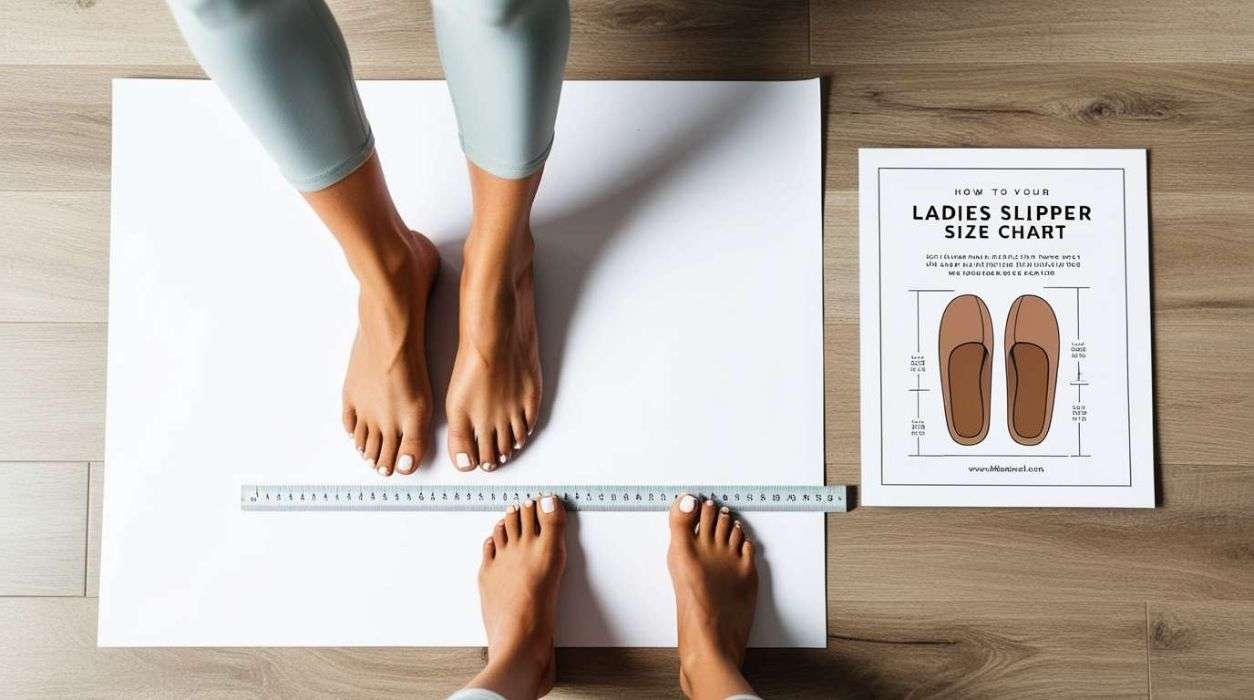
Ill-fitting shoes—whether too big or too small—can turn something as simple as walking into an uncomfortable chore. Beyond just looking awkward, the wrong size footwear can also lead to long-term issues like muscle strain, posture problems, and even chronic foot pain. Many women fall into the trap of buying slippers or shoes that are slightly too tight just because they look stylish, but this is a mistake that should never be overlooked. The truth is, comfort and proper fit matter just as much—if not more—than appearance.
Shoes that don’t fit properly can lead to a variety of problems. Oversized shoes often cause balance issues, and the constant rubbing against the heel can result in painful sores. On the other hand, shoes that are too tight may lead to posture problems, long-term foot damage, and even bruising. That’s why, no matter the style, getting the right fit should always take priority over appearance—comfort should never be compromised.
Many people mistakenly believe that only a professional can measure shoe size accurately, which makes them hesitant to take their own measurements. In reality, learning how to measure your feet correctly is a valuable skill. Knowing your exact size not only makes shopping easier but also helps you quickly check whether your preferred brand or style is available in the right fit.
You do not have to visit a shoe shop to determine your size, as it can easily be done at home. Before you begin, you should correct your standing position and stand upright on a solid and level surface. Your weight should be evenly balanced between both feet. Take the advice of another person to confirm if you are standing correctly.
First, you should place a piece of paper on the floor. Ensure that one side of the paper touches against the wall.
Next, stand with your back straight, and your feet perpendicular to the wall, and the bottom part of your heels against the wall.
Here, you will need another person to outline the toe area of the foot with a pencil or pen. This process should be repeated for both feet, as measurements can have minor differences between both feet.
To measure the foot length, you must take the measurement from the back of the heel to the front toe mark made by the pencil. Make sure to measure the longest point, which is usually around the big toe.
Finally, compare the measured length with a shoe size chart. For accuracy, only take the longer of the two measurements. Below we have given the women’s foot length chart so that you can get the exact size of you feet.
|
US SIZES |
EURO SIZES |
UK SIZES |
FOOT Length (in) |
|
4 |
35 |
2 |
8.188" |
|
4.5 |
35 |
2.5 |
8.375" |
|
5 |
35-36 |
3 |
8.563" |
|
5.5 |
36 |
3.5 |
8.75" |
|
6 |
36-37 |
4 |
8.875" |
|
6.5 |
37 |
4.5 |
9.063" |
|
7 |
37-38 |
5 |
9.25" |
|
7.5 |
38 |
5.5 |
9.375" |
|
8 |
38-39 |
6 |
9.5" |
|
8.5 |
39 |
6.5 |
9.688" |
|
9 |
39-40 |
7 |
9.875" |
|
9.5 |
40 |
7.5 |
10" |
|
10 |
40-41 |
8 |
10.188" |
|
10.5 |
41 |
8.5 |
10.375" |
|
11 |
41-42 |
9 |
10.5" |
|
11.5 |
42 |
9.5< |
10.688" |
|
12 |
42-43 |
10 |
10.875" |
To take foot length, you should stand with your feet wide apart.
Proceed by wrapping measuring tape on the portion of the foot that is the widest. This is usually the joint area behind the toes.
No need to wrap it very tightly. The measuring tape should neither be very loose nor very tight. Record the measurement in millimeters for the feet. Once done, compare the measurements to the shoe width fitting chart.
For accuracy’s sake, always choose the wider of the two measurements.
|
US SIZES |
Narrow (2A,A,AA,N) |
Medium (B,M,MW,R) |
Wide (D,E,2E,EE,W) |
|
4 |
x |
3 1/16" |
x |
|
4.5 |
x |
3 1/8" |
x |
|
5 |
2 13/16" |
3 3/16" |
3.563" |
|
5.5 |
2 7/8" |
3 1/4" |
3.625" |
|
6 |
2 15/16" |
3 5/16" |
3.688" |
|
6.5 |
3" |
3 3/16" |
3.75" |
|
7 |
3 1/16" |
3 7/8" |
3.813" |
|
7.5 |
3 1/8" |
3 1/2" |
3.875" |
|
8 |
3 3/16" |
3 9/16" |
3.938" |
|
8.5 |
3 1/4" |
3 5/8" |
4" |
|
9 |
3 5/16" |
3 11/16" |
4.063" |
|
9.5 |
3 3/8" |
3 3/4" |
4.125" |
|
10 |
3 7/16" |
3 13/16" |
4.188" |
|
10.5 |
3 1/2" |
3 7/8" |
4.25" |
|
11 |
3 9/16" |
3 15/16" |
4.313" |
|
12 |
3 11/16" |
4 1/16" |
4.438" |
• Our feet are asymmetric, and one foot is always bigger than the other so you should take measurements of both feet. While trying out the shoes, choose them to fit the larger foot so that you completely eliminate the problem of blisters or shoe discomfort.
• Feet tend to swell during the day, and the shoe size should be large enough to accommodate this change. Hence, for precise shoe fitting, the feet measurement should be taken in the afternoon when the feet are swollen to the maximum. In this way you will be able to choose a shoe that can handle to the change in size.
• Trying out the shoe is a must, even if you know your size precisely. This is because the same size can vary a bit between brands and shoe designs, and this will affect the comfort of the shoe. You will never know how much room your toes have or whether it's rubbing against the heel or not until you try them on and walk a few steps.
• Knowing the depth and width of your feet is also important if you want peak wearing comfort. For those having wide feet, taking the width measurement is crucial, and after this, look for shoes that have space for the big toe. Having such space is boots and shoes is vital for comfort.
Sneakers and Walking Shoes: If you are browsing the market for a suitable walking shoe then make sure to select one with a wide toe box so that your feet should have freedom of movement. This prevents unnecessary stress on the foot and reduces foot fatigue. The fitting for walking shoes and sneakers should be snug and still allow the foot room to move a bit without being too excessively tight. Many people wear sneakers for an extended amount of time, and so insoles and arch support should be used to make the shoes even more comfortable.
Boots: Boots fit covers the ankle and calf, and the opening of the boot needs to be large enough for the leg to slip in easily. When shopping for boots, it is advisable to choose those with a slightly wider fit that allow enough space for thick socks. To large boots mean that the foot would move around too much, making the walk unstable.
Sandals: In the sandals case, fit should be tighter and much more precise than a boot. The toe should not protrude forward from the front part of the sandal edge. For high heel sandals, the fitting should be even tighter. A loose fit means that the feet will slip forward and backward. Adjustable straps go a long way in making the fit secure.
Taking your foot measurement at home doesn’t have to be complicated. With a piece of paper, a ruler, and a few quick minutes, you very well can obtain an accurate measurement that will take the luck out of online shopping. This also allows you to pair your measurement with an accurate ladies slipper size chart rather than having to return your slippers because they were uncomfortable or poor fitting. Ultimately, taking the time to measure your foot before hitting the buy now, will make your feet happy.
The footwear market in 2026 is changing very fast. Many shop owners and online
READ FULLBuying shoes is a part of daily life for every woman. However, the way you buy
READ FULLPlatform sandals have become one of the most popular footwear c
READ FULL